
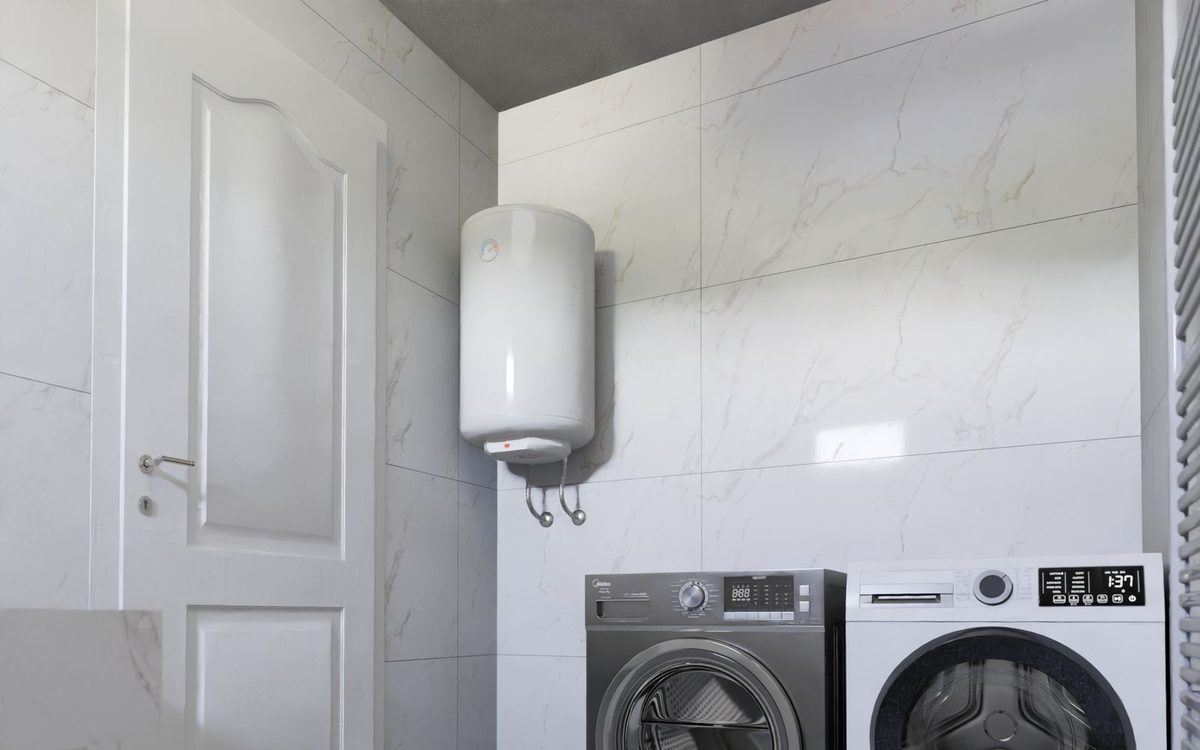
If your water heater is leaking, shut off the cold water supply to the tank and the power or gas to the heater before you do anything else. A full tank on a pressurized line does not stop by itself, so every minute the supply stays open adds to the damage. Everything after that, finding the source, deciding between repair and replacement, calling your insurer and drying the space, goes better once the water has stopped. This guide covers each step for Los Angeles and California homeowners and property managers.
What to do when your water heater is leaking: the first hour
The order matters more than speed. Work through these steps in sequence:
- Close the cold water shutoff valve on the heater. If the valve is out of reach or will not turn, close the main water supply to the house instead.
- Cut power or gas. Turn off the breaker for an electric unit, or close the gas valve for a gas unit. If water has reached outlets or the electrical panel, do not wade in to reach the breaker; leave it to an electrician or the utility.
- Photograph the damage before you clean up. Take wide and close shots of the heater, the standing water and anything wet. Your insurer will ask for them, and our guide on how to document fire and water damage for your insurance claim lists what to capture.
- Confirm the water is coming from the heater. A roof leak or condensation can look like a heater problem, so check the area above and around the unit before you blame the tank.
- Start removing water. Move belongings out of the wet zone and mop or wet-vac standing water. Be careful with it: water that has leaked from a heater can be hot enough to scald.
Why is the water heater leaking? Match the spot to the cause
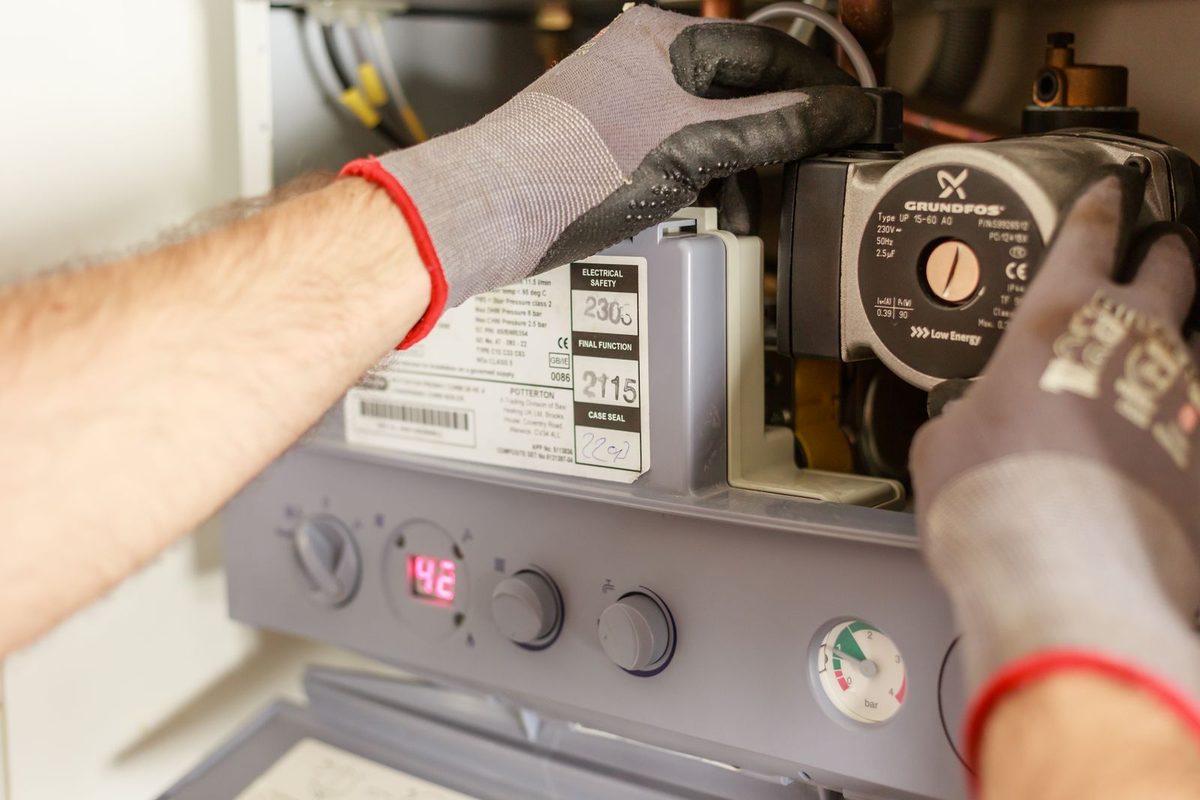
Where the water appears tells you most of what you need to know. A leak at the top usually points to plumbing connections, while water pooling under the tank is a different and more serious problem.
| Where the water shows up | Likely cause | Usual next step |
|---|---|---|
| Inlet or outlet pipe connections at the top | Loose fittings | Often fixed by tightening with a wrench |
| Drain valve near the bottom | Loose washer inside the valve | A plumber can usually fix it quickly |
| Temperature and pressure (T&P) valve or its discharge pipe | A faulty valve, or an open valve relieving excess pressure | Have a plumber inspect it |
| Bottom of the tank, water pooling underneath | Cracked inner tank from age and wear | Replace the heater |
| Moisture with no clear source | Condensation or a roof leak | Trace the water elsewhere |
The T&P valve row deserves a second look. If the valve is open and the thermostat is set between 120 and 140°F, it may be releasing excess pressure rather than failing outright. Either way it is a safety device, so a plumber should check it instead of you capping or plugging it.
Repair or replace a leaking water heater: age settles it
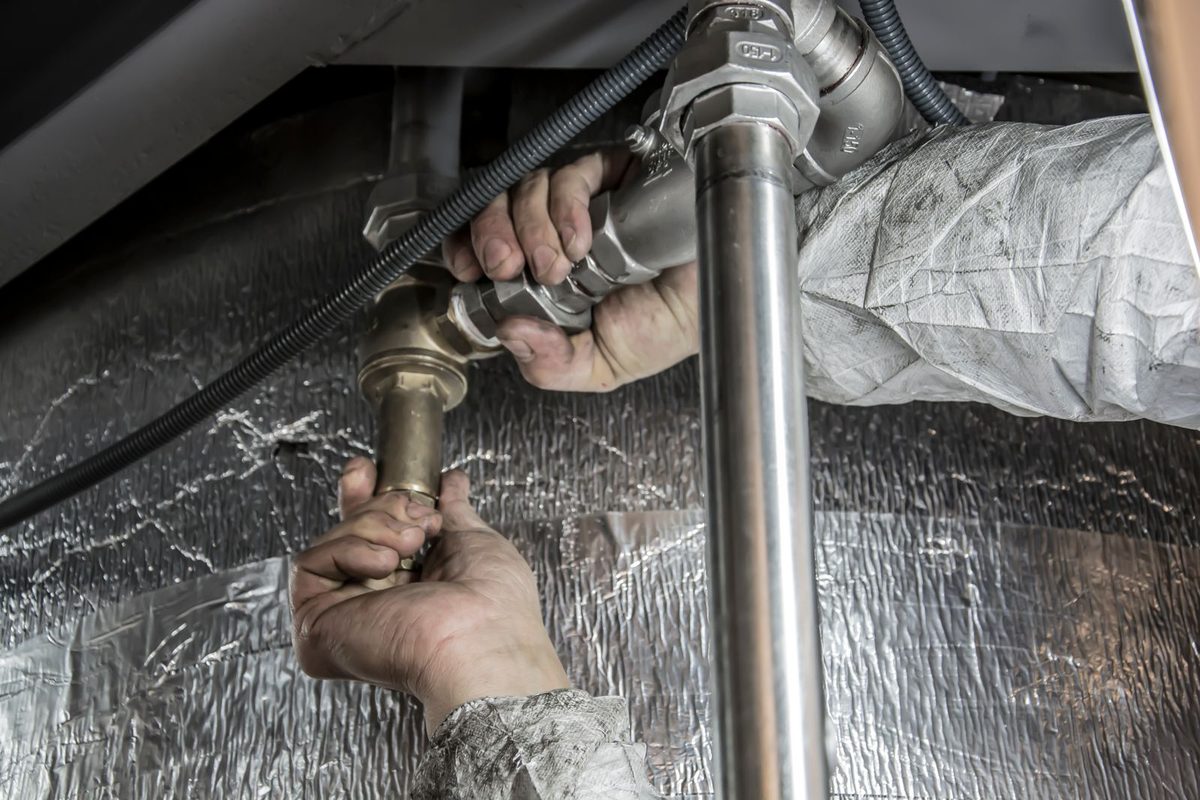
Most tank water heaters last about a decade, and the commonly cited range is 8 to 12 years. Angi suggests considering replacement once a unit passes 15 years, and treats ongoing problems in a unit older than 10 to 12 years as a sign it has reached the end of its useful life. Rust-colored water from the taps and loud popping or banging from sediment shifting inside the tank are the other warning signs worth noting.
Our reading of that evidence: a leak from the tank body is a replacement decision regardless of age, because a cracked inner tank cannot be repaired. A leak at a fitting or valve is the only real repair-or-replace question, and age is the tiebreaker. On a heater past ten years, we would put the repair money toward a new unit, since a cheap fix on a tank that close to failure buys little time.
Does homeowners insurance cover a leaking water heater in California?
It usually separates the damage from the appliance. Standard policies commonly cover water damage from a sudden discharge, such as a tank that ruptures, but exclude neglect, wear and tear, and mechanical breakdown. MoneyGeek notes that HO-3 policies carry that exclusion, so a slow failure of an aging tank is likely to fall under it. Mold is excluded unless it was caused by accidental water discharge, which matters if a slow leak went unnoticed for weeks.
That makes timing the central fact in most claims. A leak you can show started suddenly, with dated photos and a quick shutoff, is easier to present than one that looks like it ran for a long time. The heater itself may or may not be covered, so read your policy wording or ask your insurer directly; this is general information, not legal or insurance advice, and coverage varies by policy.
Drying the area and preventing mold after a water heater leak
The EPA’s guidance is to fix plumbing leaks and other water problems as soon as possible and dry all items completely. Hard surfaces can be scrubbed with detergent and water and dried fully, while porous materials such as carpet and ceiling tiles may have to be thrown away if they become moldy.
Know when it is no longer a do-it-yourself job. The EPA says to consult its remediation guidance if mold growth covers more than 10 square feet, and to bring in a professional if sewage or other contaminated water caused the damage or the HVAC system may be contaminated. Rental properties add a legal layer, which we cover in California landlord mold liability.
One more check: if the floor stays wet after you have closed the heater’s supply valve, the heater was not the only source. Water can also come from a pipe elsewhere in the house, including one under the foundation, and our guide to slab leak water damage explains how those are found.
California’s strapping rule when you replace a water heater
California Health and Safety Code section 19211 requires new and replacement water heaters, and existing residential water heaters, to be braced, anchored or strapped against falling or sliding in an earthquake. The standard it points to is the California Plumbing Code, including any local changes a city or county has made. It covers standard heaters of 120 gallons or less for which a pre-engineered strapping kit is readily available, and a seller must certify compliance in writing to the buyer. If your leak ends in a replacement, make sure the installer straps the new unit.
Water heater leak FAQ
Is a leaking water heater an emergency?
Treat standing water around the base as urgent. It usually means the inner tank is failing, and the water will keep coming until the supply is closed. A few drops at a fitting is less pressing, but shut off the supply anyway until a plumber has looked at it.
Can I keep using a water heater that is leaking?
Not if the leak comes from the tank. That kind of leak is caused by a crack that does not heal, and it can worsen suddenly. A loose fitting or drain valve washer is a repair, but keep the heater off until it is fixed so the leak does not damage the floor.
How do I tell condensation or a roof leak from a heater leak?
Close the heater’s cold water supply, wipe the area dry and check again over the next few hours. If water keeps appearing with the supply closed, the source is somewhere else: a roof, another pipe or condensation. Inspect the area above the unit as well.
Does homeowners insurance cover a leaking water heater?
Often it covers the resulting water damage when the discharge was sudden, but excludes wear and tear and mechanical breakdown, so the heater itself may not be covered. Mold from a long-running leak may also be excluded. Your policy wording decides, so confirm the details with your insurer.
Do I have to strap a replacement water heater in California?
Yes. Health and Safety Code section 19211 requires new and replacement water heaters to be braced, anchored or strapped, following the California Plumbing Code plus any stricter local rules. Standard heaters up to 120 gallons are covered, and a seller must certify compliance to a buyer in writing.
A leaking water heater is rarely a mystery once the water is off. The spot where it shows up narrows the cause, and the heater’s age settles whether a repair is worth paying for. The costly part is almost always the gap between the first drip and the first towel, which is why the shutoff valve and the breaker or gas valve are worth locating before you ever need them.